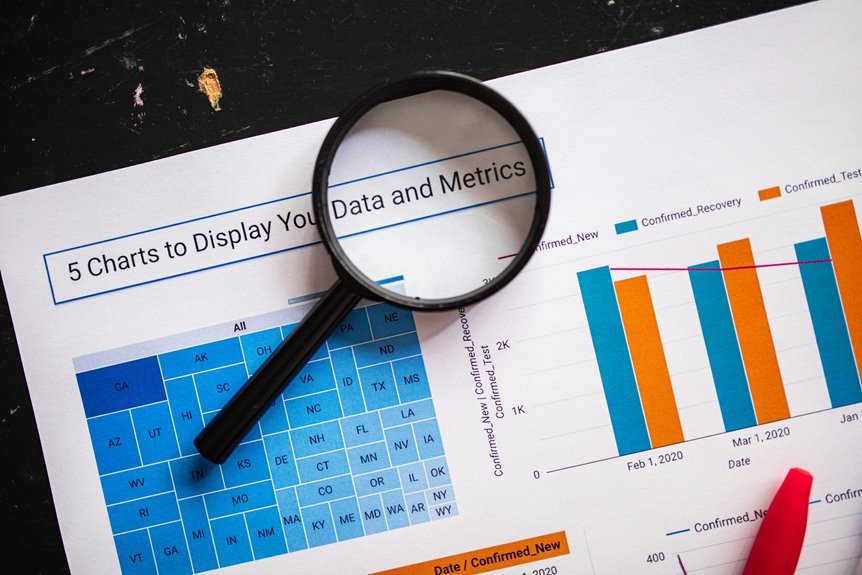
The Executive Metrics Study of the specified data points underscores the critical role of quantitative analysis in shaping organizational strategies. By examining these metrics, organizations can pinpoint areas of operational efficiency and financial stability. The emphasis on performance benchmarks and data visualization techniques reveals underlying trends that may otherwise go unnoticed. This analysis prompts a deeper exploration of how these insights can drive strategic alignment and foster an environment of continuous improvement.
The Importance of Executive Metrics
Although organizations often prioritize operational and financial metrics, the significance of executive metrics cannot be overstated.
Executive dashboards provide a comprehensive view of critical data, enabling leaders to make informed, data-driven decisions.
Analyzing Performance Indicators
Analyzing performance indicators is crucial for organizations striving to achieve their strategic objectives.
By establishing performance benchmarks, businesses can effectively measure progress against goals.
Data visualization techniques enhance understanding and interpretation of complex metrics, allowing for informed decision-making.
This analytical approach empowers organizations to identify strengths and weaknesses, facilitating continuous improvement and ultimately fostering an environment of accountability and freedom in operational execution.
Risk Assessment Through Metrics
How can organizations effectively mitigate potential threats to their operations?
Through rigorous risk identification and metric evaluation, businesses can pinpoint vulnerabilities and assess their impact.
By employing analytical frameworks, organizations can transform data into actionable insights, thereby enhancing their ability to navigate uncertainties.
Regularly updating these metrics fosters a proactive approach, ensuring that potential risks are addressed before they escalate into significant challenges.
Setting Strategic Goals With Data Insights
What strategies can organizations implement to align their strategic goals with data-driven insights?
Effective goal alignment strategies involve leveraging data-driven decision making to inform strategic prioritization. Organizations can enhance performance benchmarking by analyzing relevant metrics, ensuring that goals are not only measurable but also achievable.
This approach fosters agility, enabling organizations to adapt their objectives in response to evolving data insights and market dynamics.
Conclusion
In the realm of organizational strategy, the exploration of executive metrics serves as a compass guiding leaders through uncharted waters. By meticulously charting performance indicators, organizations can navigate the complexities of risk and opportunity, ensuring that every decision aligns with their strategic north star. Just as a skilled mariner relies on the stars for direction, so too must organizations harness data insights, fostering a culture of continuous improvement that propels them toward their envisioned horizon of success.